
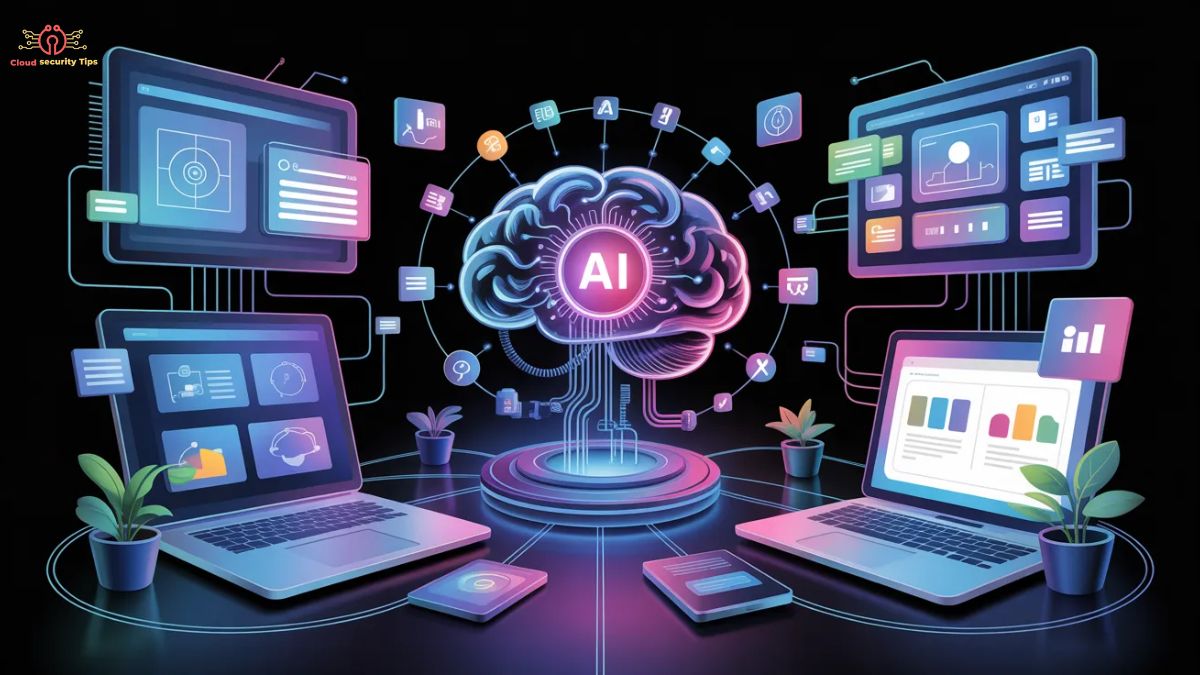
Over the last few decades, technology has evolved at an incredible speed. We now have access to powerful tools for cloud computing, automation, artificial intelligence, data analytics, and digital collaboration.
On the surface, it looks like businesses are more advanced and productive than ever before.
But when you look deeper into real organizations, a different reality appears.Despite all this technological progress, most companies are still struggling with the same fundamental issue:
Technology has become more powerful — but also more fragmented and complex.
Instead of simplifying work, modern digital systems often create more confusion:
- teams use too many disconnected tools
- workflows are unclear or duplicated
- data is scattered across platforms
- communication between departments breaks down
- and manual coordination still consumes too much time
This gap between “technology potential” and “real-world execution” is the exact problem that led me to start building Capabilisense.
Not as another software product.
But as a unified intelligence layer for digital work, automation, and decision-making systems.
Why I Am Building Capabilisense – The Real-World Truth Behind System Failures

After years of observing digital transformation projects and enterprise environments, one pattern becomes extremely clear:
Most failures are not caused by technology itself.
They are caused by human complexity and system fragmentation.
In almost every environment, the same challenges repeat again and again:
- teams are not aligned on the same vision
- responsibilities are unclear or overlapping
- communication between stakeholders breaks down
- and tools do not work together in a meaningful way
Even when companies invest heavily in advanced platforms, success is not guaranteed.
Because the real question is not:
“Do we have the right tools?”
The real question is:
“Do all these tools actually work together in a way humans can understand?”
This is where most systems fail.
And this is exactly the problem Capabilisense is designed to solve — by bringing clarity, structure, and intelligent automation into one unified ecosystem.
From Real Experience to System-Level Thinking
The idea behind Capabilisense is not theoretical. It comes from observing real-world systems where even well-funded transformation programs struggle to succeed.
Across industries, I saw the same pattern:
- strong technical architecture
- but weak system alignment
- powerful tools
- but disconnected workflows
- advanced platforms
- but poor user understanding
This creates what I call “digital fragmentation stress” — where users spend more time managing tools than doing actual work.
Capabilisense is being built to remove that stress completely.
Instead of forcing humans to adapt to systems, the system adapts to humans.
It behaves more like a digital intelligence layer that understands context, workflow behavior, and operational structure.
The long-term vision is simple:
Build a system where complexity disappears — not increases.
What is Capabilisense – A Unified AI-Powered Digital Ecosystem
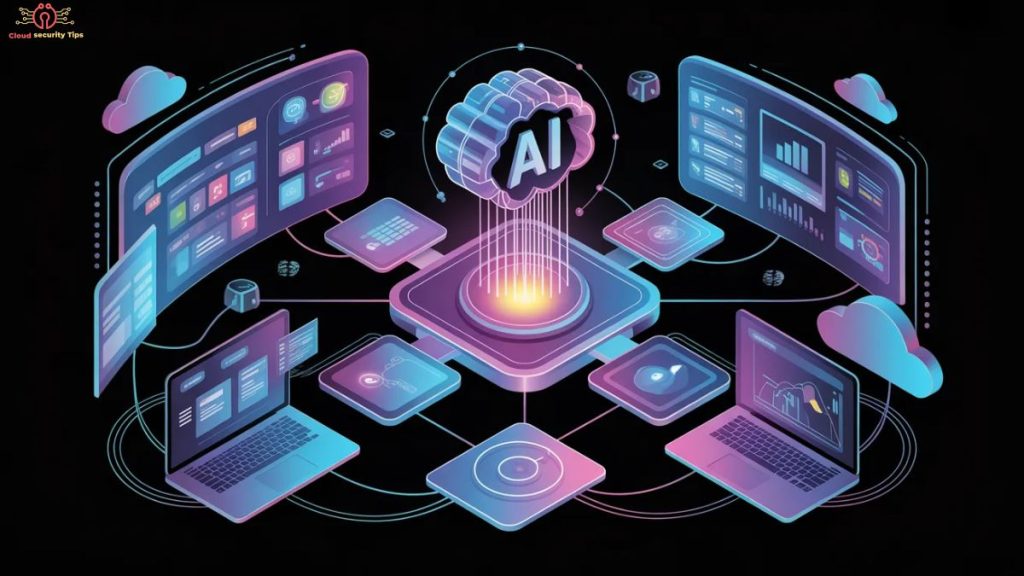
Capabilisense is designed as a next-generation AI-powered SaaS ecosystem that unifies productivity, automation, and workflow intelligence.
Instead of existing as a single tool, it functions as a connected system of intelligent modules that work together in real time.
At its foundation, it combines:
- workflow orchestration systems
- automation engines
- productivity infrastructure
- and AI-driven decision support
But the real value is not in the components — it is in how they interact.
Because every module is designed to communicate, adapt, and optimize behavior based on system context.
This creates a unified environment where digital work becomes:
- more structured
- more automated
- and more intelligent over time
How the Capabilisense System Works – Intelligence in Motion
Capabilisense is built on a modular architecture connected through a central intelligence layer.
When a user interacts with the system, it does not simply execute commands.
It interprets intent.
For example:
- tasks are automatically prioritized based on context
- workflows are reorganized dynamically
- data is processed in real time
- and system outputs are optimized automatically
Instead of static workflows, the system behaves dynamically — like a living structure.
Another critical design principle is cloud-native accessibility.
This ensures:
- global access
- real-time synchronization
- and scalable performance across all environments
Whether it is a small team or a large enterprise, the system adapts without losing structure or speed.
Core Idea Behind Capabilisense – One System, Infinite Coordination
At the heart of Capabilisense lies a simple but powerful philosophy:
Replace fragmented tools with one intelligent, coordinated ecosystem.
Today, most users switch between multiple platforms just to complete a single workflow. This creates friction, slows productivity, and increases mental load.
Capabilisense eliminates this friction by creating a unified environment where:
- workflows are connected automatically
- data moves seamlessly between modules
- and actions are intelligently coordinated
Another key element is adaptability.
The system is designed to evolve over time by learning from:
- user behavior patterns
- workflow structures
- and system interactions
This makes Capabilisense not a static tool, but a continuously improving digital ecosystem.
Goals of Capabilisense – Productivity, Simplicity, and Scalability
The foundation of Capabilisense is built on three core principles.
Productivity is improved by eliminating repetitive manual work and allowing users to focus on meaningful, high-value decisions instead of operational tasks.
Simplicity ensures that even complex systems remain understandable and easy to navigate for both technical and non-technical users.
Scalability guarantees that the system can evolve from small workflows to large enterprise-level environments without losing performance or structure.
Together, these principles define the long-term architecture of the platform.
Features of Capabilisense – Designed for the Future of AI Systems
Capabilisense is built using modern digital architecture principles that align with the future of AI-driven systems.
Automation is one of its core strengths, allowing the system to execute tasks based on rules, triggers, and contextual intelligence.
User experience is equally important. The interface is designed to reduce cognitive load and help users focus on outcomes instead of system complexity.
Performance is ensured through cloud-native infrastructure, distributed processing, and scalable backend design.
Most importantly, Capabilisense is future-ready. It is built to integrate with:
- artificial intelligence models
- machine learning systems
- and external APIs
This makes it adaptable for future technological evolution.
Why Capabilisense Matters in Today’s Digital World
We are entering a new era where AI and automation are becoming the foundation of every digital system.
Organizations are no longer looking for isolated tools.
They are looking for connected, intelligent ecosystems that can think, adapt, and optimize themselves.
Capabilisense directly addresses this shift by reducing dependency on fragmented systems and replacing them with a unified architecture.
It also improves:
- operational efficiency
- decision accuracy
- and system consistency
More importantly, it aligns with the global transition toward AI-driven infrastructure.
Lessons From Real-World Transformation Failures
One of the strongest insights behind Capabilisense comes from observing why large transformation initiatives fail.
In most cases, failure is not caused by lack of technology.
It is caused by:
- misalignment between stakeholders
- unclear communication channels
- resistance to change
- and disconnected operational systems
These issues create friction that slows down or completely blocks progress.
Capabilisense is designed to remove this friction by introducing clarity, structured workflows, and intelligent automation that supports users instead of overwhelming them.
Future Vision – A Global AI Operating System for Digital Work
The long-term vision of Capabilisense is to evolve into a global AI-powered SaaS ecosystem that supports individuals, developers, startups, and enterprises.
In the future, the platform will expand into:
- intelligent decision-making systems
- autonomous workflow engines
- API ecosystems for developers
- and enterprise transformation platforms
It will continuously evolve through AI advancements, user feedback, and real-world usage patterns.
The ultimate goal is to build a system that grows with technology and remains relevant for the next decade of digital evolution.
Conclusion – Redefining the Future of Digital Systems
Building Capabilisense is not just about creating another software product.
It is about rethinking how digital systems should work in a world that is becoming more complex every day.
The goal is clear:
- reduce complexity
- increase automation
- improve clarity
- and create intelligent systems that evolve over time
Capabilisense is being designed as a future-ready ecosystem that brings order to digital chaos and transforms how people interact with technology.
3 thoughts on “Why I’m Building Capabilisense – AI-Powered Digital Transformation Platform”