
Comprehensive Guide to Driving Modes, EV Efficiency, Battery Consumption & Software Optimizations
Electric vehicles (EVs) have transformed how drivers think about efficiency, performance, and energy management. Among modern EVs, the Cadillac Lyriq stands out for its advanced software, multiple driving modes, and intelligent energy systems. But a very common question among potential buyers, Lyriq owners, and EV enthusiasts is:
In this complete, easy‑to‑understand guide, we will explain:
- What driving modes are in the Cadillac Lyriq
- How each mode affects battery usage and range
- How regenerative braking and EV systems contribute
- How software updates change performance
- Real‑world range considerations
- Tips to maximize efficiency and battery life
1. Overview of Driving Modes in Cadillac Lyriq
The Cadillac Lyriq comes with several driving modes designed to tailor the vehicle’s performance, comfort, and energy use. Unlike traditional cars where driving modes primarily adjust throttle sensitivity and transmission, EV modes influence:
- Electric motor torque and responsiveness
- Regenerative braking strength
- Climate system energy priorities
- Battery thermal management
- Traction and stability systems
These changes can directly impact how efficiently energy is used, and therefore affect the real‑world driving range — usually measured in how many miles you get per charge.
Cadillac Lyriq Driving Modes Explained
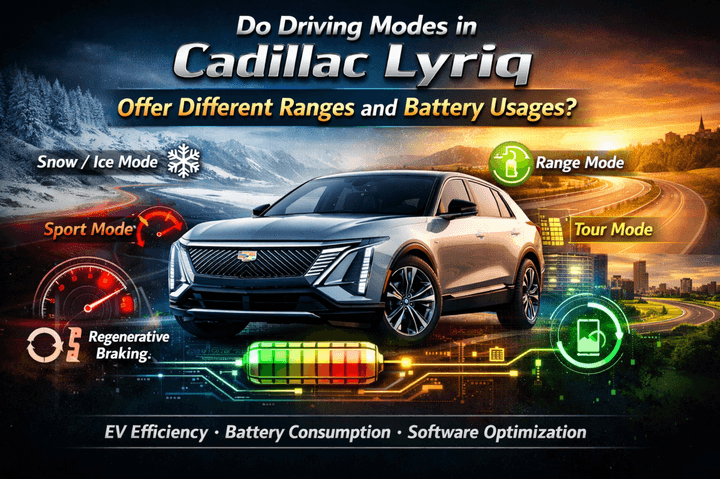
The Cadillac Lyriq typically offers:
- Tour Mode — Balanced driving for daily use
- Sport Mode — More aggressive performance settings
- Range Mode — Maximum efficiency focus
- Snow/Ice Mode — Safety first on slippery surfaces
- My Mode — Custom user preferences
Each of these affects battery usage and estimated battery range differently, which we will explain in detail.
2. Impact of Driving Modes on Range and Battery Usage
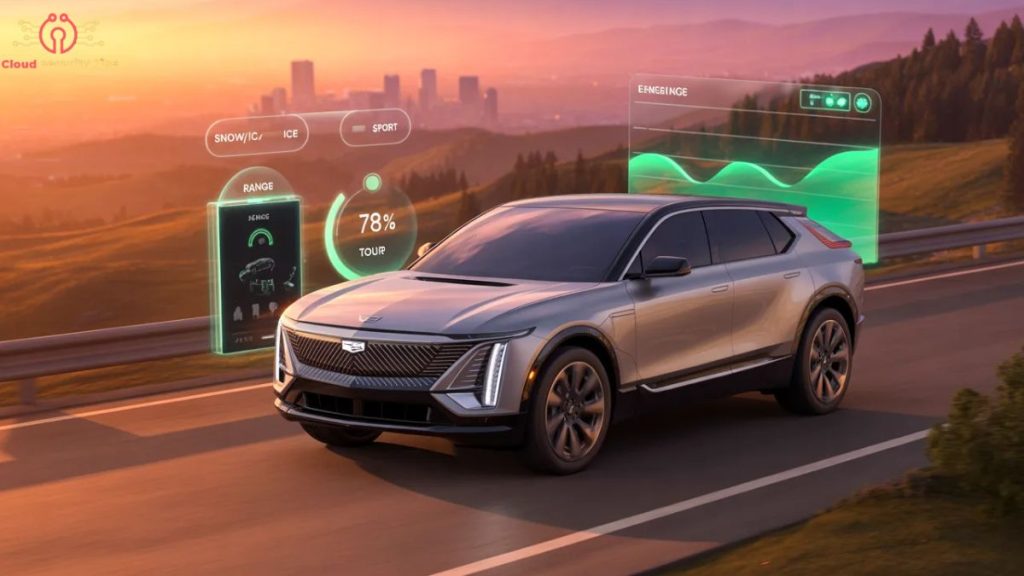
How Driving Modes Change EV Performance
Electric vehicles don’t use gasoline metrics like miles per gallon (MPG). Instead, they rely on measurements like:
Miles per kilowatt‑hour (mi/kWh)
Battery state of charge (SOC)
Estimated remaining range
Driving modes adjust the vehicle’s internal software algorithms to optimize either power, comfort, or efficiency. This means the same car can deliver slightly different battery usage outcomes based on mode selection.
For example:
- Sport Mode may use more energy because it delivers faster acceleration and higher motor output.
- Range Mode limits peak power and increases energy recovery through regenerative braking to extend battery life per mile.
Therefore, yes — different driving modes in the Cadillac Lyriq do offer different range and battery usage results.
3. Energy Efficiency: Comparing Different Driving Modes
Let’s examine each mode and understand how it impacts battery consumption and driving range.
3.1 Tour Mode: Balanced Comfort and Efficiency
Tour Mode is the default mode in most Cadillac Lyriq vehicles. It’s designed for everyday driving and provides:
Smooth throttle response
Moderate regenerative braking
Standard traction and stability control
Balanced energy distribution
Tour Mode is perfect for commuters, city driving, and mixed routes where you want comfortable performance without sacrificing efficiency.
In Tour Mode, the vehicle uses a moderate amount of battery power — less than Sport Mode, but more than Range Mode.
3.2 Sport Mode: High Performance, Higher Energy Use
Sport Mode prioritizes performance and responsiveness. When activated:
- Motor torque becomes sharper
- Acceleration is quicker
- Steering feels more responsive
- Regenerative braking is less aggressive
Unfortunately, this also leads to higher battery usage per mile. Sport Mode is best when you want strong performance, such as merging on highways or dynamic driving, but it’s not ideal if your goal is to maximize range.
Key insight: Sport Mode increases power output but decreases efficiency.
3.3 Snow/Ice Mode: Safety on Slippery Roads
Snow/Ice Mode modifies throttle response and traction control to minimize wheel slip. This makes driving on wet or icy surfaces safer.
However, improved traction and stability often demand intermediate energy use — because the vehicle must balance grip with power delivery and braking behavior.
As a result:
- Battery consumption increases slightly
- Regenerative braking behavior changes
- Comfort systems may stay active longer to maintain control
Snow/Ice Mode is safer in cold conditions, but it’s not optimized for maximum energy efficiency.
3.4 Range Mode: Designed to Maximize Battery Efficiency
Range Mode is specifically built for extending driving distance. When activated, it:
Optimizes throttle response for low consumption
Increases regenerative braking for energy recovery
Reduces HVAC load when possible
Adjusts battery thermal management to reduce power use
Range Mode is best for:
- Long highway trips
- Low‑charge situations
- Energy‑efficient driving
This mode can noticeably increase overall range compared to Sport and Tour modes — sometimes by 5–15% or more, depending on conditions and driving style.
4. How Driving Modes Affect Performance and Handling
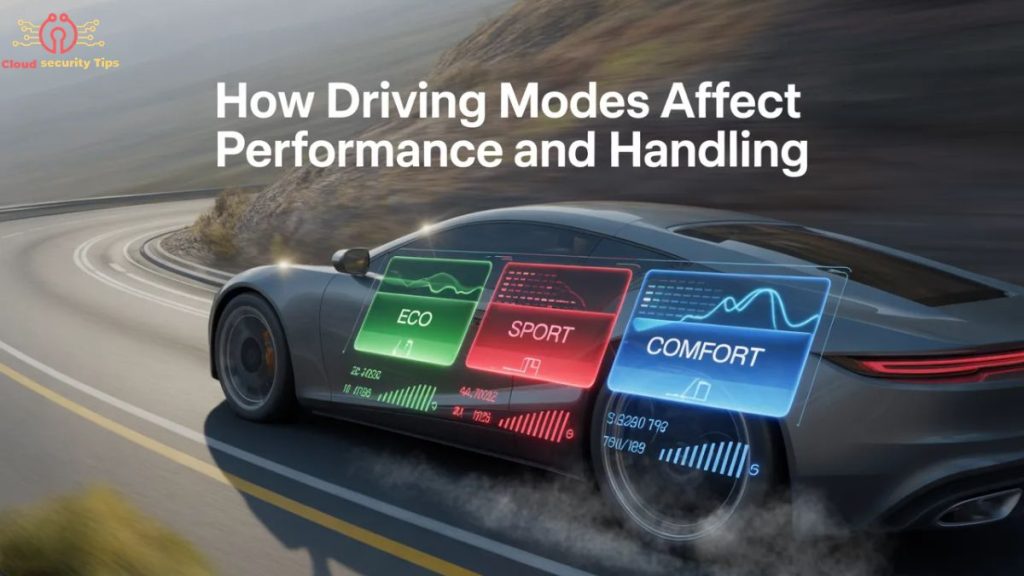
Driving modes don’t just change energy usage — they also influence how the car feels on the road.
Sport Mode gives more aggressive throttle and steering response.
Tour Mode focuses on comfort.
Range Mode may reduce peak power to stretch battery.
Snow/Ice Mode focuses on traction and wheelspin reduction.
These changes are possible because EVs like the Lyriq use complex software that integrates:
- Drive‑by‑wire inputs
- Electric motor torque algorithms
- Stability control calibrations
- Regenerative braking strategies
Together, these shape the driving experience and the energy profile of each mode.
5. Regenerative Braking in Different Modes
One of the biggest impacts on battery usage is regenerative braking — the system that recovers kinetic energy and puts it back into the battery while slowing down.
Different modes apply regenerative braking differently:
- Range Mode often increases regenerative strength to recover more energy
- Sport Mode may lower regen priority to favor performance
- Tour Mode balances energy recovery with comfort
Effective use of regenerative braking can improve your miles per kilowatt‑hour — which means more range per charge.
6. Real‑World Range Variations by Driving Style
Your driving behavior matters — even with the same driving mode selected.
For example:
- Aggressive acceleration increases energy use
- Frequent braking or uphill travel demands more battery power
- High speeds use energy faster than highway cruising at moderate speeds
- Use of HVAC and climate systems also affects efficiency
Experts generally recommend:
Smooth acceleration
Moderate steady speed
Maximized regenerative braking
Preconditioned cabin temperature before driving
These habits help you squeeze more range out of each charge.
7. Monitoring Battery Usage with Cadillac Lyriq Dashboard
The Lyriq’s digital dashboard and infotainment system provide real‑time data on:
Battery state of charge (SOC)
Estimated remaining range
Energy usage charts
Driving mode indicators
Regenerative braking status
These tools help drivers understand how their choices and driving style affect range, empowering them to adjust behavior for better efficiency.
8. Latest Updates in Cadillac Lyriq Driving Modes
Cadillac regularly releases Over‑the‑Air (OTA) software updates for Lyriq. These updates can include:
Optimized motor control software
Improved regenerative braking curves
Better traction control tuning
More accurate range prediction models
These enhancements improve not just comfort and performance, but battery usage and efficiency over time — without hardware changes.
9. Software Enhancements Affecting Battery Efficiency
Recent updates focus on:
- Battery thermal management improvements
- Motor torque mapping updates
- Regeneration system refinement
- Better EV range forecasting algorithms
This means that even if you drive the same way, newer software may help you achieve better efficiency and longer range.
10. New Driving Modes and Range Improvements
As of now, Cadillac has not officially announced brand‑new driving modes beyond those mentioned above. However:
Software refinements can modify mode behavior
Future OTA updates may add adaptive or predictive mode features
Industry trends suggest EV makers may use AI to optimize driving profiles
These potential improvements are not confirmed but possible based on software and EV trends.
11. Impact of Firmware Updates on EV Performance
EVs like Lyriq benefit greatly from software advancements. Firmware updates can:
Adjust driving mode parameters
Improve battery capacity handling
Make range estimates more accurate
Optimize regenerative braking systems
When analyzing EV performance, it’s essential to recognize that software plays a big role in real‑world efficiency
12. Future Driving Mode Possibilities (Unconfirmed)
While nothing is officially confirmed by Cadillac yet, future advanced features could include:
AI‑assisted driving mode optimization
Weather‑adaptive range mode
Predictive battery efficiency profiles
Cloud‑based energy optimization
These features are speculative but reflect where the EV industry is heading — especially for vehicles with connected software like the Lyriq.
13. Practical Tips for Maximizing Range in Cadillac Lyriq
Here are actionable tips to enhance range:
Use Range Mode on long trips
Keep speeds moderate (50–65 mph)
Use regenerative braking aggressively
Precondition battery and cabin before driving
Minimize heavy HVAC use
Keep tires properly inflated
Install updates promptly
These steps help improve miles per charge and overall efficiency.
14. Practical Tips for Battery Management in Cadillac Lyriq
Good battery management helps performance and battery lifespan:
Avoid frequent deep discharges
Charge between 20%–80% for daily use
Use Level 2 charging (240V) when possible
Maintain consistent charging routines
Update software regularly
Following these practices supports better battery health and preserves long‑term range.
Conclusion: Driving Modes Affect Range and Battery Usage
To summarize:
Yes — driving modes in Cadillac Lyriq directly impact range and battery usage.
Range Mode maximizes efficiency.
Sport Mode prioritizes performance but uses more energy.
Snow/Ice Mode improves safety but can slightly reduce efficiency.
Tour Mode offers well‑rounded performance and economy.
Regenerative braking and software updates further affect overall usage.
By understanding these modes and adjusting driving habits, Lyriq owners can get the most out of every charge.
FAQs
1. Do driving modes in the Cadillac Lyriq really affect battery range?
Yes, driving modes directly impact battery consumption and range. Modes like Range Mode improve efficiency by limiting power and increasing regenerative braking, while Sport Mode uses more energy due to aggressive acceleration and higher motor output.
2. Which driving mode gives the best range in the Cadillac Lyriq?
Range Mode provides the best efficiency and longest driving distance. It optimizes energy usage by adjusting throttle response, reducing HVAC load, and maximizing regenerative braking.
3. Does Sport Mode drain the battery faster?
Yes, Sport Mode consumes more battery because it prioritizes performance. Faster acceleration, higher torque output, and reduced regenerative braking all contribute to increased energy usage.
4. Is Snow/Ice Mode bad for battery efficiency?
Snow/Ice Mode is not designed for efficiency—it’s built for safety. It may slightly increase battery usage because the system focuses on traction control, stability, and smoother power delivery on slippery roads.
5. Can software updates improve battery performance in the Cadillac Lyriq?
Absolutely. Over-the-air (OTA) updates from Cadillac can improve battery efficiency, refine regenerative braking, and enhance range estimation without any hardware changes.
Conclusion
Driving modes in the Cadillac Lyriq are more than just comfort settings—they play a crucial role in determining how efficiently the vehicle uses energy. Whether you’re aiming for maximum performance or extended range, each mode is carefully engineered to deliver a different balance of power, control, and efficiency.
If your goal is to maximize range, Range Mode is your best option. If you prefer dynamic performance, Sport Mode delivers excitement at the cost of higher battery usage. Meanwhile, Tour Mode offers a practical middle ground, and Snow/Ice Mode ensures safety in challenging conditions.
Ultimately, the combination of smart driving habits, effective use of regenerative braking, and regular software updates will help you get the most out of every charge. By understanding how each mode works, you can make informed decisions and fully optimize your EV experience.