
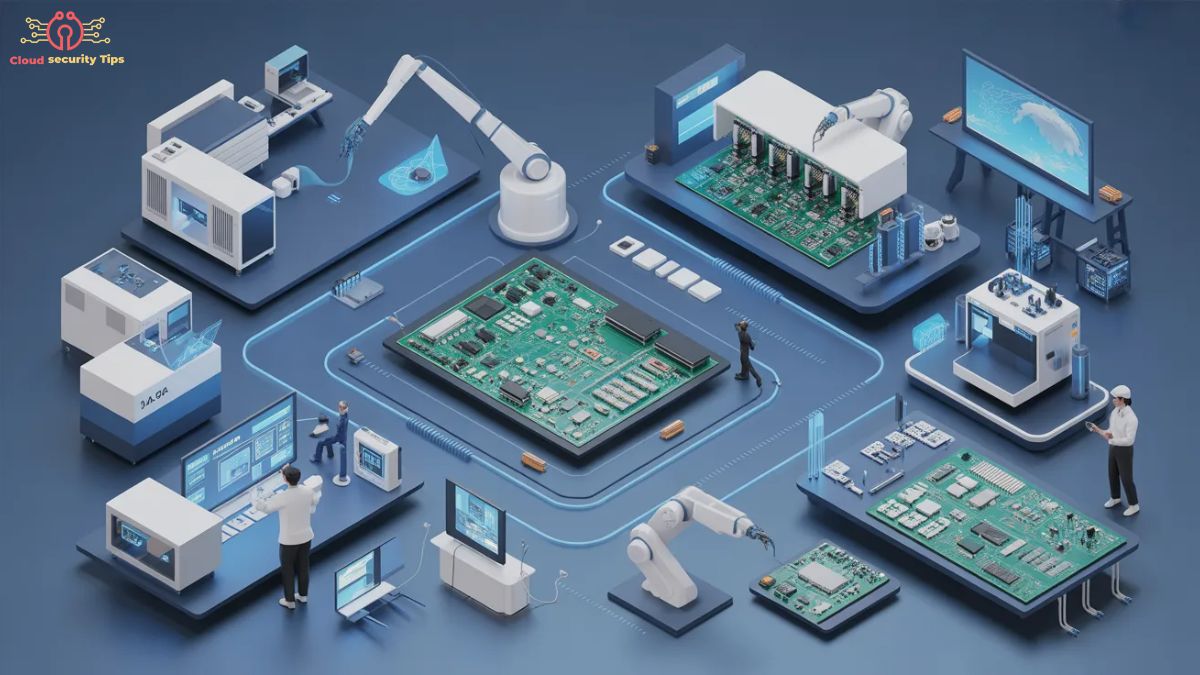
The global electronics manufacturing services industry crossed $580 billion in 2025 and is on a steady track toward $700 billion by 2027 as OEMs continue to outsource more hardware production. For brands shipping connected devices, EV controllers, or medical instruments, picking the right EMS companies often matters more than the bill of materials itself — a misstep adds weeks to NPI, blows up DFM budgets, and stalls product launches.
This guide ranks the top 10 EMS companies for 2026, evaluating each on capability depth, certifications, geographic reach, and the products they actually ship at scale. You’ll find a side-by-side comparison table, a selection methodology, a buyer’s guide for shortlisting partners, and a FAQ that tackles the questions procurement teams ask before signing an NDA.
If you’re sourcing a long-term EMS partner — or just running a sanity check on your current one — start here.
Global EMS Companies at a Glance
| Company | HQ | Specialty | Best For | Lead Time |
|---|---|---|---|---|
| Foxconn | Taipei, Taiwan | High-volume consumer electronics | Smartphones, servers, EVs | 4–8 weeks |
| Jabil | St. Petersburg, FL, USA | Diversified manufacturing | Healthcare, automotive, cloud | 5–10 weeks |
| PCBSync | Shenzhen, China | Turnkey PCB + PCBA + sourcing | Prototype to mid-volume, IoT, medical | 2–4 weeks |
| Flex | Austin, TX, USA / Singapore | Sketch-to-scale EMS | Automotive, health solutions | 6–10 weeks |
| Sanmina | San Jose, CA, USA | Complex, regulated builds | Defense, medical, optical | 8–12 weeks |
| Celestica | Toronto, Canada | A&D, capital equipment | Aerospace, semicap, hyperscale | 8–14 weeks |
| Benchmark Electronics | Tempe, AZ, USA | Engineering-led EMS | Medical, A&D, industrial | 6–10 weeks |
| Pegatron | Taipei, Taiwan | Consumer + computing | Smartphones, notebooks, IoT | 4–8 weeks |
| Wistron | Hsinchu, Taiwan | IT infrastructure | Servers, displays, automotive | 5–9 weeks |
| Plexus | Neenah, WI, USA | Highly complex, low-to-mid volume | Healthcare, A&D, industrial | 8–14 weeks |
How We Built This Ranking
This list weighs five factors: certifications (ISO 9001, IPC-A-610 Class 3, AS9100, ISO 13485, IATF 16949), capability breadth across PCB fabrication, assembly and box build, geographic footprint and supply-chain resilience, customer references in regulated industries, and published lead times for both prototypes and production runs. We reviewed each company’s public capability sheets, audited certifications listed on their corporate sites, and cross-checked customer disclosures. Single-niche providers were excluded in favor of broader electronic manufacturing partners. The 2026 ranking reflects current market position — not historical revenue alone.
1. Foxconn (Hon Hai Precision Industry)
The world’s largest contract manufacturer by revenue, Foxconn assembles roughly 40% of global consumer electronics.
- Founded / HQ: 1974 / Tucheng, Taipei, Taiwan
- Key Services: PCB fabrication, SMT assembly, mechanical sub-assembly, full box build, ODM design
- Notable Capabilities: 1.4 million+ employees at peak; sites across China, India, Vietnam, Mexico, the US, and the Czech Republic; advanced HDI and any-layer fab; in-house tooling and CNC
- Industries Served: Consumer electronics, EVs (MIH platform), data-center servers, networking, medical
- Best For: OEMs needing millions of units per quarter with global redundancy and a ramp speed few rivals can match
Foxconn’s scale is also its trade-off — small-batch and prototype work usually goes elsewhere, and lead times can stretch when you’re not a top-tier customer.
2. Jabil
Jabil is a US-headquartered diversified manufacturer running more than 100 facilities across 30 countries.
- Founded / HQ: 1966 / St. Petersburg, Florida, USA
- Key Services: PCBA, system integration, supply-chain management, design engineering, automation
- Notable Capabilities: ISO 9001, ISO 13485, IATF 16949, and AS9100 certifications across regulated sites; NPI centers in San Jose and Boston; large-format box build
- Industries Served: Healthcare, automotive, cloud and capital equipment, packaging, consumer
- Best For: Tier-1 OEMs needing US/EU/LATAM footprint plus design support from concept through sustaining engineering
Jabil’s healthcare division is particularly strong for FDA-regulated builds, and acquisitions like Anwell and Mikros have deepened its precision-optics and pharma-services capability.
3. PCBSync
A Shenzhen-based EMS specialist, PCBSync offers turnkey PCB and PCBA programs from prototype through mid-volume production runs.
- Founded / HQ: 2005 (20+ years experience) / Shenzhen, China
- Key Services: PCB manufacturing, PCB assembly, components sourcing, box build, cable harness — under one roof
- Notable Capabilities: 1–56 layer boards in FR4, HDI, Flex, Rigid-Flex, Rogers, Ceramic, Aluminum, copper-core, and heavy copper; SMT, THT, BGA, and mixed-technology assembly; ISO 9001, IPC-A-610 Class 3, RoHS-compliant
- Testing: AOI, X-ray, 3D SPI, ICT, flying probe, functional test
- Industries Served: Automotive, medical, aerospace, industrial, IoT, robotics, telecom, drone, military
- Best For: Hardware teams that want a fast prototype-to-production handoff without juggling separate fab, assembly, and sourcing vendors
Publicly referenced customers include Honeywell, Siemens Healthineers, Analog Devices, Continental, TCL, Xiaomi, Whirlpool, Datalogic, and Fermilab — a mix that signals comfort with both regulated builds and high-mix programs.
4. Flex (Flextronics)
Flex runs a “sketch-to-scale” model that combines design, engineering, and global manufacturing under one roof.
- Founded / HQ: 1969 / Austin, Texas (Singapore registered)
- Key Services: PCBA, mechanical, system integration, design services, supply-chain analytics
- Notable Capabilities: ~100 sites across 30 countries; ISO 9001, ISO 13485, IATF 16949; advanced packaging and miniaturization labs in Silicon Valley
- Industries Served: Automotive, health solutions, industrial, lifestyle, consumer
- Best For: Brands needing DFM input plus distributed production across NA, EMEA, and APAC
Flex’s Nextracker spin-off and its strong EV power-electronics business have made it a go-to for renewables and mobility programs, with documented Tier-1 automotive certifications across multiple plants.
5. Sanmina
Sanmina built its reputation on complex, regulated builds where compliance documentation matters as much as soldering.
- Founded / HQ: 1980 / San Jose, California, USA
- Key Services: PCB fabrication, backplane assembly, optical and RF assembly, full system integration, repair and remanufacturing
- Notable Capabilities: AS9100D, ISO 13485, ITAR-registered US sites; advanced backplane fab; precision enclosures and cable
- Industries Served: Communications networks, defense and aerospace, medical, industrial, cloud
- Best For: Programs requiring trusted US manufacturing, ITAR coverage, and complex backplane or RF assembly
Sanmina is among the few EMS providers that owns significant PCB fabrication capacity in North America, giving customers a hedge against APAC supply disruption when geopolitical risk shows up on the agenda.
6. Celestica
Celestica blends advanced manufacturing with engineering services across two segments: ATS (Advanced Technology Solutions) and CCS (Connectivity & Cloud Solutions).
- Founded / HQ: 1994 (spun off from IBM) / Toronto, Canada
- Key Services: PCBA, high-mix low-volume builds, hyperscale networking integration, design services
- Notable Capabilities: AS9100D, ISO 13485, Nadcap accreditation; hyperscale data-center hardware integration at scale; failure-analysis labs
- Industries Served: Aerospace and defense, healthtech, capital equipment, semiconductor capital, hyperscale cloud
- Best For: Builds that mix regulated low-volume work (medical, A&D) with high-volume cloud or networking programs
Celestica’s recent growth in 800G optical networking and AI-server integration has made it a quiet beneficiary of the data-center buildout.
7. Benchmark Electronics
Benchmark is an engineering-led EMS provider that markets itself on solving hard technical problems rather than chasing low-bid commodity work.
- Founded / HQ: 1979 / Tempe, Arizona, USA
- Key Services: Design engineering, PCBA, precision machining, full system integration
- Notable Capabilities: ISO 13485, AS9100D, IATF 16949, ISO 14001; in-house Lark Technologies RF/microwave assembly; semiconductor test capability
- Industries Served: Medical, aerospace and defense, semiconductor capital equipment, industrials
- Best For: Programs that need deep engineering collaboration on RF, optical, or precision assemblies — not just contract assembly
Benchmark has invested in advanced packaging and high-density interconnect lines that suit modern radar, satcom, and surgical-robotics products.
8. Pegatron
Spun off from ASUS in 2008, Pegatron is now a top-five global EMS player with deep roots in consumer computing.
- Founded / HQ: 2008 / Beitou, Taipei, Taiwan
- Key Services: PCBA, system assembly, ODM design, mechanical
- Notable Capabilities: Major sites in Taiwan, China, Indonesia, Mexico, and the Czech Republic; smartphone and notebook assembly at high volume
- Industries Served: Smartphones, notebooks, networking gear, IoT, automotive electronics
- Best For: Consumer electronics brands needing high-volume, cost-competitive assembly with mature ODM capability
Pegatron has been steadily diversifying away from a few big customers, expanding its automotive and server work to balance its consumer concentration.
9. Wistron
Wistron is one of Taiwan’s “big three” ODM/EMS players alongside Foxconn and Pegatron, with particular strength in IT infrastructure.
- Founded / HQ: 2001 / Hsinchu, Taiwan
- Key Services: PCBA, server assembly, notebooks, displays, automotive electronics, after-sales service
- Notable Capabilities: Manufacturing across Taiwan, China, Mexico, the Czech Republic, India, and Malaysia; large server-integration lines for hyperscalers; AS9100 at select sites
- Industries Served: Server and networking, notebooks, displays, automotive, medical
- Best For: Customers building data-center hardware or notebooks at scale, with growing automotive-electronics options
Wistron’s spin-off Wiwynn focuses purely on hyperscaler servers, while the parent has pivoted toward automotive, medical, and AI-server programs.
10. Plexus Corp
Plexus targets the upper end of the complexity spectrum — low-to-mid volume, high-mix builds where engineering collaboration is the deliverable.
- Founded / HQ: 1979 / Neenah, Wisconsin, USA
- Key Services: Design and development engineering, PCBA, system integration, sustaining engineering, aftermarket services
- Notable Capabilities: ISO 13485, AS9100D, ISO 14001; Class 8 cleanroom capabilities at select sites; product-realization centers in the US, Europe, and APAC
- Industries Served: Healthcare and life sciences, aerospace and defense, industrial automation, semiconductor capital
- Best For: OEMs developing complex regulated products needing engineering partnership from PDR through end-of-life
Plexus’s heavy investment in healthcare manufacturing — particularly surgical robotics, in-vitro diagnostics, and patient monitoring — makes it a frequent shortlist entry for medtech startups.
How to Choose the Right EMS Partner for Your Project
Picking an EMS company is a 5–10 year commitment in practice. Switching partners mid-life cycle is painful and expensive, so the upfront diligence is worth doing carefully.
Certifications & Compliance
Match the certifications to your end market. ISO 9001 is table stakes. Medical devices require ISO 13485 and FDA registration. Aerospace demands AS9100D and often Nadcap. Automotive Tier-1 work expects IATF 16949, and defense programs need ITAR or DDTC registration. Confirm the certifications apply to the specific site that will build your product — not just the corporate parent.
Capability Match
Map your BOM against the EMS provider’s process library. Heavy copper, microvia HDI, embedded passives, and press-fit connectors aren’t universal. Ask for a DFM review on your toughest assembly before signing.
Lead Time & Turnaround
Quoted lead time and actual lead time often diverge. Ask for on-time delivery data over the past four quarters, plus how the provider handled allocation during the 2021–2023 component crisis.
Pricing Model & MOQ
Some EMS providers chase six-figure unit volumes; others accept 100-piece prototype runs and ramp. Confirm minimums for both PCB fab and component placement, and whether the quote bundles NRE, fixtures, and stencils.
Communication & Engineering Support
A dedicated NPI engineer who replies inside a business day is worth a real premium. Ask how many active programs each engineer supports — overloaded teams produce slow responses and weak DFM reports.
Industry Experience
References from your specific niche carry more weight than headline customer logos. A provider strong in consumer goods may underwhelm on a 510(k)-track medical build.
Scalability from Prototype to Production
The best partner for 100 prototype boards may not be the best partner for 100,000 production units. Confirm the provider can handle both without forcing you to re-qualify a new line halfway through your launch.
Frequently Asked Questions
What’s the difference between EMS and ODM?
EMS providers build to the customer’s design — the customer owns the IP. ODM (Original Design Manufacturer) providers design the product themselves and license or sell the design to brands. Many large players like Foxconn and Pegatron do both, but pure EMS partners such as Sanmina and Benchmark focus on customer-owned designs and the engineering services that wrap around them.
How long does it take to onboard a new EMS partner?
For a moderately complex PCBA, expect 6–12 weeks from NDA to first article. The process covers DFM review, BOM scrubbing, prototype fab and assembly, first-article inspection, and process qualification. Regulated builds (ISO 13485, AS9100) add another 4–8 weeks of documentation and validation, especially when cleanroom or ESD audits are involved.
What certifications should an EMS company have?
At a minimum, ISO 9001 for quality management and IPC-A-610 Class 2 or Class 3 for assembly workmanship. Add ISO 13485 for medical, AS9100D for aerospace and defense, IATF 16949 for automotive Tier-1, and ITAR registration for US defense work. Environmental certifications like ISO 14001 and RoHS compliance are also standard.
Should I manufacture in China, Vietnam, Mexico, or the US?
China still leads on component density and supplier ecosystems. Vietnam and Mexico are gaining share for tariff and nearshoring reasons. US manufacturing is the right call for ITAR, federal contracts, or programs where IP exposure and short logistics outweigh unit cost. Many OEMs run a dual-source strategy across two regions.
Can one EMS partner handle both prototype and production?
Yes, but check that prototype and production lines actually share processes and traceability. Some providers run prototypes on bench lines that don’t transfer cleanly to volume production. PCBSync, Jabil, and Flex are among the providers structured to take a design from first prototype through volume on related lines.
How is EMS pricing typically structured?
Quotes usually break out NRE (stencils, fixtures, programming), unit price (PCB + components + labor), and a margin layer. Watch for engineering change order fees, excess and obsolete material clauses, and minimum order quantities. Bundled BOM-sourcing markups vary widely — typically 5–15% — and are negotiable.
Choosing Your EMS Partner
The right EMS companies depend less on size or revenue ranking and more on how well their certifications, processes, and engineering bench match your product’s specific requirements. Tier-1 giants like Foxconn, Jabil, and Flex are built for high-volume programs with global redundancy. Specialists like Sanmina, Plexus, and Benchmark earn their place on regulated builds that demand traceability and engineering depth. For teams that need a single partner across PCB manufacturing, assembly, and sourcing — especially at prototype-to-mid-volume — PCBSync brings a turnkey model worth shortlisting for IoT, medical, and industrial programs.
Whichever EMS providers you evaluate, request DFM feedback and an on-time delivery reference before committing. A quote tells you the price; the DFM report tells you who you’re actually working with.