
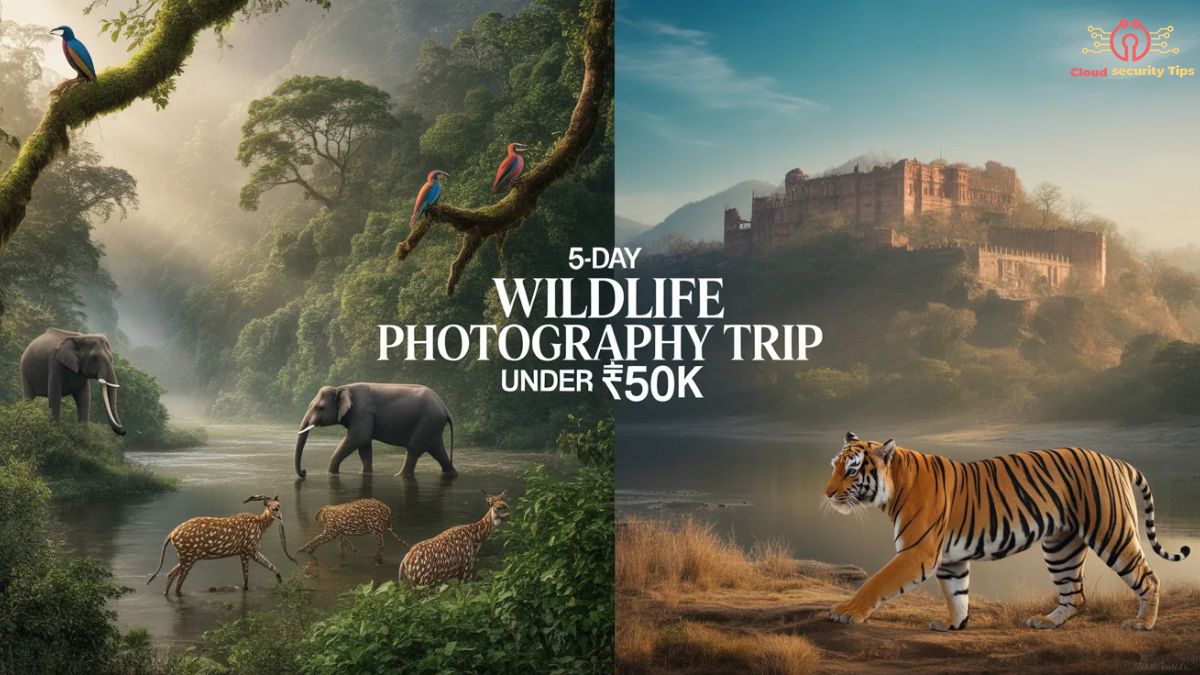
Choosing between Jim Corbett National Park and Ranthambore National Park is not a casual travel decision. For wildlife photographers working within a strict ₹50,000 budget and a 5-day window, this becomes a strategic field choice that directly impacts the quality, quantity, and style of images you will return with.
Both parks are iconic, but they operate on completely different ecological and photographic systems. November makes this decision even more important because it is a transitional season where visibility, light, and animal behavior shift significantly in both regions.
To understand which destination fits your trip, you need to look beyond tourism descriptions and evaluate how each park behaves under real photography conditions.
Two Parks, Two Completely Different Photography Worlds
Jim Corbett National Park and Ranthambore National Park cannot be compared as equals because they are built on different natural systems.
Corbett lies in the Himalayan foothills and is dominated by dense sal forests, river belts, grasslands, and thick vegetation. The environment is layered and visually complex, which naturally limits visibility but enhances atmosphere. Wildlife encounters here feel organic and often unpredictable.
Ranthambore, on the other hand, is a dry deciduous forest mixed with open scrubland, lakes, and ancient fort ruins. The terrain is more open, which increases visibility and makes wildlife, especially tigers, easier to spot and photograph.
This creates a fundamental divide in photography style.
Corbett is about waiting, observing, and building images from partial visibility and mood. Ranthambore is about positioning, timing, and capturing clear subject moments in open space.
How a ₹50,000 Budget Changes Everything
On paper, both destinations can fit into a ₹50,000 budget. In reality, they behave very differently once you start planning safaris, stays, and logistics.
In Corbett, safari costs are relatively high due to jeep-based booking systems, restricted forest zones, and the complexity of accessing core areas like Dhikala. A large portion of your budget goes into fewer but more expensive safari experiences. This means every drive becomes critical. You cannot afford wasted opportunities because you will have fewer of them.
In Ranthambore, the structure is more flexible. Shared gypsy and canter safaris reduce per-person costs, allowing you to take more drives within the same budget. This increases your chances of wildlife sightings simply through repetition and volume.
The difference is simple but powerful. Corbett forces you to extract maximum value from fewer attempts, while Ranthambore allows you to improve results through multiple opportunities.
Photography Experience: How You Actually Shoot in Each Park
The biggest mistake most travelers make is assuming both parks offer similar photography experiences. They don’t.
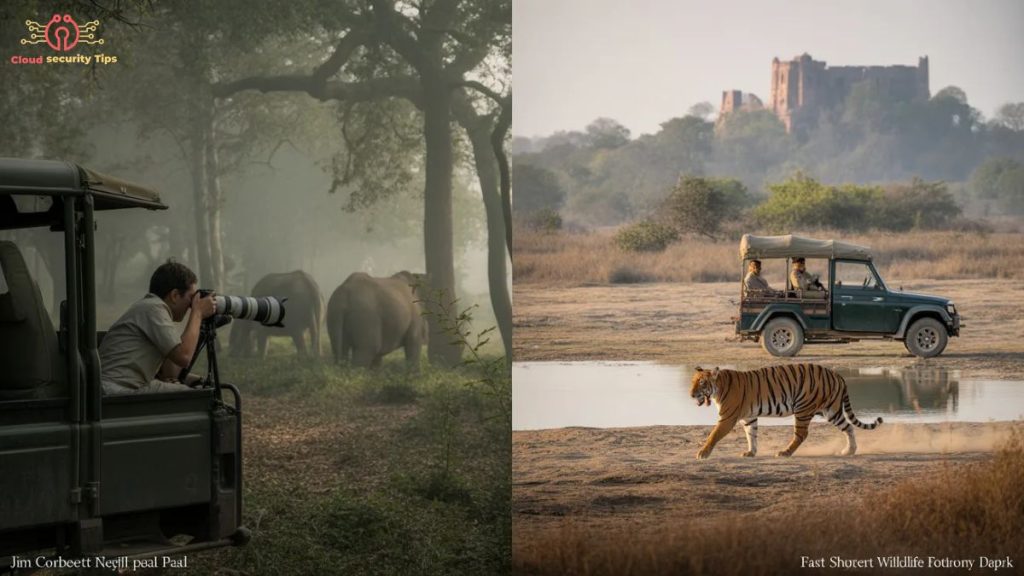
In Corbett, photography is slower and more technical. Dense forest cover reduces light, especially during early morning and late afternoon safaris. Wildlife often appears partially hidden behind vegetation, meaning you rarely get clean, unobstructed frames. Instead, you work with layers, shadows, and movement.
This environment rewards patience and field awareness. You are not just taking photos—you are interpreting behavior through gaps in the forest. Elephants moving through mist, birds perched in canopy layers, or deer appearing through riverine grass all become part of a larger visual narrative.
Ranthambore works differently. The terrain is open, which allows faster subject tracking and cleaner compositions. Tigers are more frequently visible in daylight hours, often near water bodies or sunlit clearings. The presence of ruins and lakes adds strong background elements for composition.
Here, photography becomes more reactive. You respond to movement, position yourself quickly, and focus on timing rather than long observation.
In simple terms, Corbett teaches patience, while Ranthambore rewards precision.
November Conditions and Why They Matter
November is one of the most important months for wildlife photography in India, but its impact differs sharply between these two parks.
In Corbett, the post-monsoon landscape is at its peak. The forest is fresh, green, and full of moisture. Early mornings often bring thick mist, which creates cinematic lighting conditions. However, this same density also reduces visibility, making wildlife harder to spot. Some zones also open gradually during this period, adding variability to planning.
In Ranthambore, November marks the beginning of the dry season. Vegetation becomes thinner, water sources become focal points for animal movement, and tiger sightings become more frequent. The clearer terrain significantly improves photographic success rates.
This contrast is crucial. Corbett gives you atmosphere, while Ranthambore gives you clarity.
Safari Structure and Trip Planning Reality
Planning a 5-day trip in these parks is not equally complex.
Corbett has multiple zones with different access rules. Some key areas only open in mid-November, which can directly affect your itinerary if you arrive early in the month. Dhikala, one of the most popular zones, requires special booking and often involves stricter accommodation rules inside the forest. This creates a layered planning system that requires advance coordination.
Ranthambore is more straightforward. The safari system is divided into numbered zones with predictable rotation patterns. Booking is centralized, and access remains relatively stable throughout November. This makes trip planning easier and more reliable.
For short-duration trips, this difference matters because it affects how much time you spend on logistics versus actual photography.
What Each Park Is Actually Designed For
When you remove emotion and look at pure photographic output, the distinction becomes very clear.
Corbett is designed for photographers who value ecosystem depth. It excels in forest storytelling, bird diversity, elephant encounters, and atmospheric landscapes. It is a park where the environment itself becomes the subject.
Ranthambore is designed for visibility-driven wildlife photography. It excels in tiger sightings, clean action frames, and structured safari experiences. It is a park where the subject becomes the focus.
Neither is better universally. They simply serve different creative goals.
Final Decision Framework
The decision ultimately depends on what you want from your 5-day ₹50,000 trip.
If your priority is higher probability of tiger photography, better visibility, and more controlled shooting conditions, Ranthambore is the stronger choice. It gives you more chances, clearer subjects, and higher efficiency within a short time frame.
If your priority is atmospheric forest photography, diverse wildlife behavior, and a more immersive natural ecosystem, Corbett offers a richer but more challenging experience.
One is about results. The other is about depth.
FAQs
1. Which is better for wildlife photography, Corbett or Ranthambore?
Ranthambore for tiger shots, Corbett for forest and habitat photography.
2. Can I do a 5-day trip in ₹50,000?
Yes, both are possible, but Ranthambore is easier to manage within this budget.
3. Which park has higher tiger sighting chances?
Ranthambore generally offers higher and more frequent tiger visibility.
4. Is Corbett suitable for beginners?
Yes, but it requires more patience and better field observation skills.
5. Why is November important for these parks?
It’s a transition season—clear visibility in Ranthambore and misty, rich forests in Corbett.
1 thought on “Corbett vs Ranthambore: Best 5-Day Wildlife Trip Under ₹50K”